
LAMA-K original practice
Practise topics about everyday culture and social systems in Korea.
These are original practice questions, not an official exam or a complete official question bank.
Your learning language does not determine the languages available in the actual exam.
Learning translations and reading aids are drafts awaiting native-speaker review.
Words and expressions
Grammar and reading notes · 1
가: 어느 나라에서 오셨어요? 나: ( ) 알맞은 대답은?
어느 나라 asks for a country. 언제 asks when, 어떻게 asks how, and 누구와 asks who came with you.
Grammar and reading notes · 2
동네 한국어 수업을 찾고 있습니다. 주민센터에서 물어볼 말은?
알아볼 수 있나요 politely asks where to find information. Check the actual class availability and application conditions with the organisation offering it.
Grammar and reading notes · 3
우리 건물 안내: 재활용품은 수요일 저녁에 배출하세요. 이 건물에서는 언제 내놓습니까?
This building’s notice specifies Wednesday evening. Waste rules and collection days can vary by area and building, so check the guidance for your own address.
Grammar and reading notes · 4
늦은 밤 집에서 큰 음악 소리가 납니다. 이웃을 배려하는 행동은?
배려 means considering other people’s situation. Lowering the volume late at night helps neighbours rest.
Grammar and reading notes · 5
병원 접수 안내: 예약하신 분은 성함을 말씀해 주세요. 무엇을 말해야 합니까?
성함 is the respectful word for a person’s name. Reception is asking for the booking name to find the appointment.
Grammar and reading notes · 6
신청서에 연락처를 적으라고 합니다. 알맞은 정보는?
연락처 means a way to contact you, such as a phone number. On real forms, check the purpose of collection and provide the required information accurately.
Study and exam practice
가: 어느 나라에서 오셨어요? 나: ( ) 알맞은 대답은?
A: Which country are you from? B: ( ) Choose the appropriate reply.
- 아침 8시에 왔어요. · I came at 8 a.m.
- 버스를 타고 왔어요. · I came by bus.
- 베트남에서 왔어요. · I am from Vietnam.
- 친구와 같이 왔어요. · I came with a friend.
동네 한국어 수업을 찾고 있습니다. 주민센터에서 물어볼 말은?
You are looking for a local Korean class. What could you ask at the community service centre?
- 이 비행기는 언제 출발해요? · When does this flight depart?
- 김치찌개 하나 주세요. · One kimchi stew, please.
- 구두를 수선해 주세요. · Please repair my shoes.
- 근처 한국어 수업은 어디에서 알아볼 수 있나요? · Where can I find information about nearby Korean classes?
우리 건물 안내: 재활용품은 수요일 저녁에 배출하세요. 이 건물에서는 언제 내놓습니까?
Our building’s notice: Put recyclables out on Wednesday evening. When should residents of this building put them out?
- 수요일 저녁 · Wednesday evening
- 월요일 아침 · Monday morning
- 매일 아무 때나 · Any time every day
- 금요일 점심 · Friday lunchtime
늦은 밤 집에서 큰 음악 소리가 납니다. 이웃을 배려하는 행동은?
Loud music is playing in your home late at night. Which action shows consideration for neighbours?
- 소리를 더 크게 해요. · Turn the volume up.
- 음량을 낮춰요. · Turn the volume down.
- 복도에서 큰 소리로 노래해요. · Sing loudly in the corridor.
- 창문을 열고 스피커를 밖으로 향하게 해요. · Open the window and point the speaker outside.
Greetings & polite speech
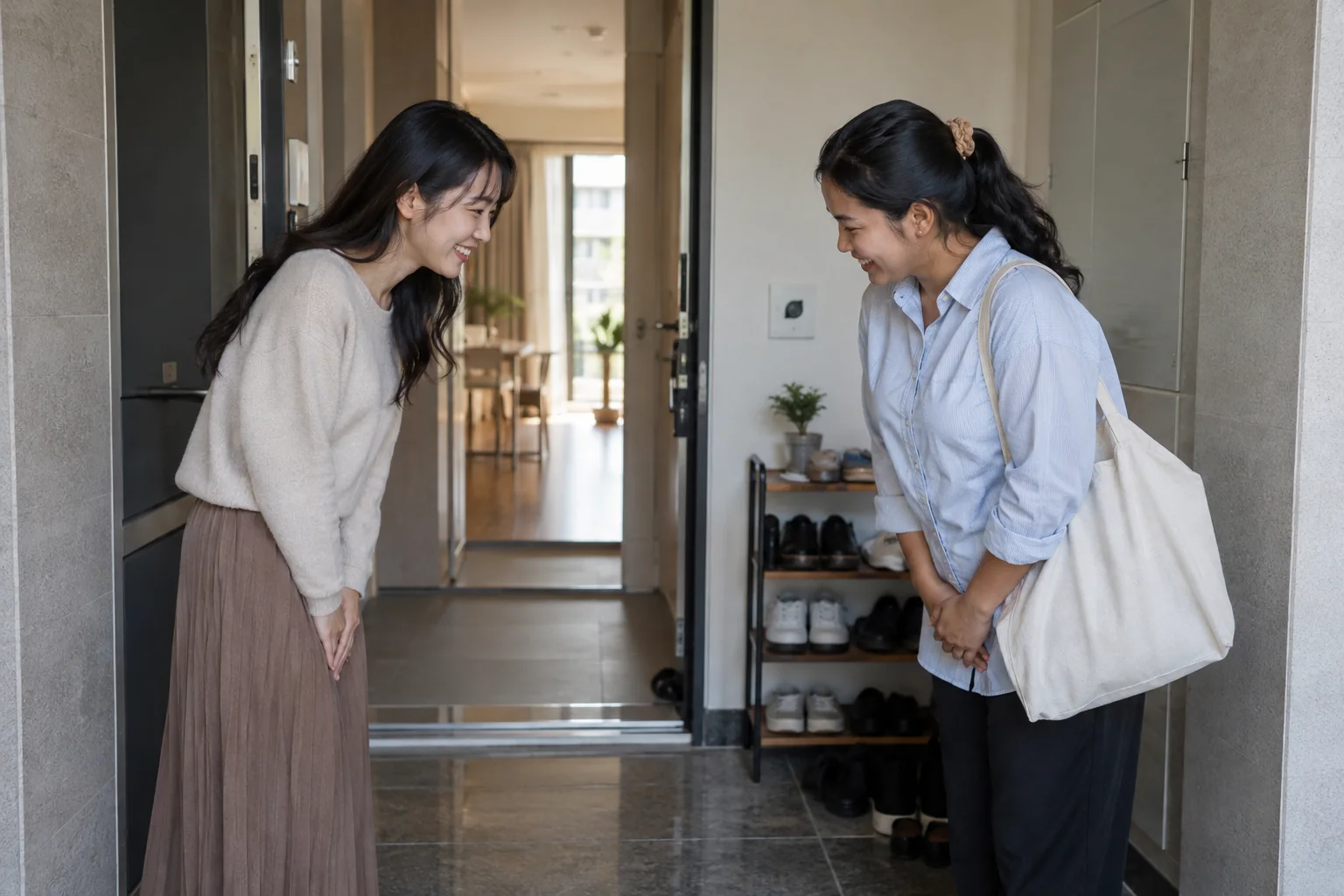
You meet a neighbor in the elevator. Give a small nod and say “안녕하세요”.
Start with polite speech when meeting someone new.
Use both hands when passing something, as the situation allows.
Ask if informal speech feels comfortable to both of you.
“안녕하십니까 [an-nyeong-ha-sim-ni-kka]” sounds more formal at an interview or official presentation. It is not needed every time you greet a neighbor; age alone does not decide informal speech.
안녕하세요.
Hello.
an-nyeong-ha-se-yo
Home & neighbors
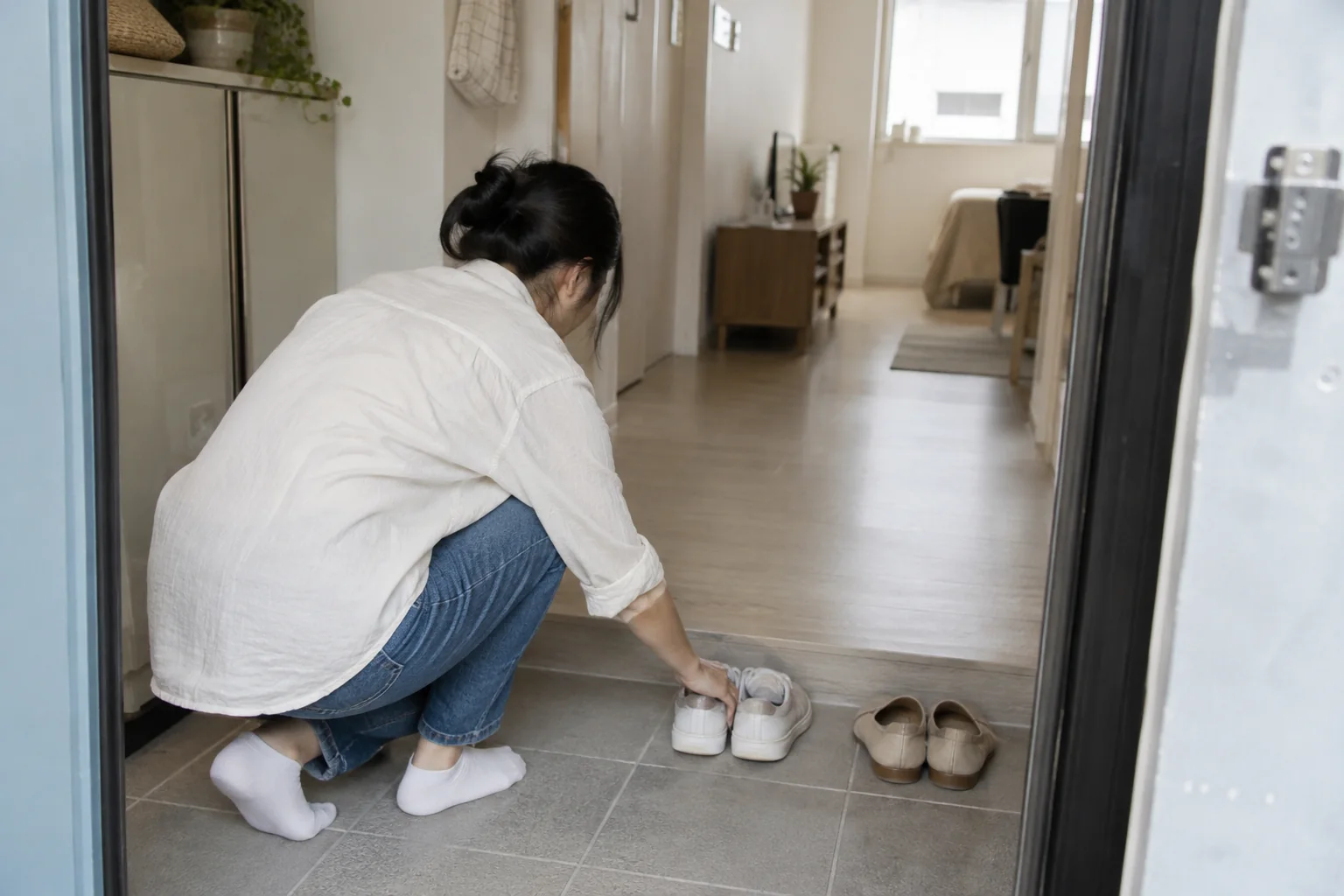
You move into a new home but do not know where or when to put out rubbish. Ask the manager or a neighbor.
Check whether to remove shoes when entering a home.
Check local instructions for recycling, food waste and general rubbish.
Keep noise low late at night and discuss concerns calmly.
Bags, sorting rules and collection times vary by municipality and building. Check with the building manager or local district instead of copying another neighborhood.
쓰레기는 어디에 버려요?
Where should I put the rubbish?
sseu-re-gi-neun eo-di-e beo-ryeo-yo
Friends & community

You meet a new friend at a language exchange. Confirm where and when you will meet next.
Start a first meeting casually in a public place.
Ask before taking or posting someone’s photo.
Share both helpful experiences and difficulties in the community.
“Let’s have a meal sometime” may not be a fixed appointment. Confirm a date and respect different response habits, even when replies take time.
언제 만날까요?
When shall we meet?
eon-je man-nal-kka-yo
Life with neighbors
Speak politely about shared spaces and everyday concerns.
조금 조용히 해 주세요.
Please be a little quieter.
jo-geum jo-yong-hi hae ju-se-yo
쓰레기는 어디에 버려요?
Where should I put the rubbish?
sseu-re-gi-neun eo-di-e beo-ryeo-yo
이 자리에 앉아도 돼요?
May I sit here?
i ja-ri-e an-ja-do dwae-yo
먼저 가세요.
Please go ahead.
meon-jeo ga-se-yo
Make a specific, polite request rather than assuming the other person knows the problem.
A late-night living-room concert
Your neighbor is enjoying music, but you need to sleep. Make a calm request instead of competing with an even louder speaker. Tomorrow you might be sharing the same elevator again!
The basic quiet request is polite in form, but a gentle tone and a brief reason help. The alternative below makes the request less direct. Ask about a seat before sitting, and use the “go ahead” expression when giving way.
Practice a quiet request with a gentle voice. Then switch scenes: ask permission to sit in an empty seat.
조금 조용히 해 주시겠어요?
Could you please be a little quieter?
jo-geum jo-yong-hi hae ju-si-ge-sseo-yo
Everyday polite · A gentler request, especially with someone you do not know well. Your voice and the situation matter as much as the ending.
Ask for help
Ask someone to repeat, slow down, or help.
천천히 말해 주세요.
Please speak slowly.
cheon-cheon-hi mal-hae ju-se-yo
다시 말해 주세요.
Please say it again.
da-si mal-hae ju-se-yo
잘 모르겠어요.
I do not quite understand.
jal mo-reu-ge-sseo-yo
도와주세요.
Please help me.
do-wa-ju-se-yo
You can say you do not understand; asking again is part of learning.
Your ears need a slower speed
A clerk explains a form at full speed. You catch the first word, then everything sounds like a fast train. Ask them to slow down, and ask for the important part again.
Nodding does not have to mean you understood. Say you are not sure before moving on. Adding the apology below can gently open a request; you do not need to apologize over and over for learning.
Ask a partner to say a sentence quickly. Request a slower repeat, then repeat the part you understood.
죄송하지만, 다시 말해 주세요.
Sorry, could you say that again?
jwe-song-ha-ji-man, da-si mal-hae ju-se-yo
Everyday polite · A gentle way to interrupt when you missed something. Follow it with the part you want repeated, if you can.
Frequently asked questions
Where can I check KIIP classes and assessment schedules?
Practise topics about everyday culture and social systems in Korea. These are original practice questions, not an official exam or a complete official question bank.
What should I know about Grammar and reading notes · 1?
어느 나라 asks for a country. 언제 asks when, 어떻게 asks how, and 누구와 asks who came with you.
What should I know about Grammar and reading notes · 2?
알아볼 수 있나요 politely asks where to find information. Check the actual class availability and application conditions with the organisation offering it.
Check official guidance
Official websites use the languages provided by each authority.